
Call for papers
Academic Article Submission Process
Participate in the 1st International Interdisciplinary Congress of Social Sciences (CIICIS 2026), a high-level academic space that brings together researchers, teachers and professionals to critically reflect on the contemporary challenges of the social sciences in contexts of social, digital and cultural transformation.
CICIIS 2026 is issuing an open call for scientific articles for its various thematic areas, with a submission deadline established according to the official congress schedule. Submissions must be original, unpublished, and meet criteria of academic rigor and interdisciplinarity.
Important dates
Shipping items (initial version)
Author registration deadline
Delivery of the final article
Evaluation criteria
Full articles submitted to the International Interinstitutional Congress of Social Sciences – CICIIS 2026 will be subjected to a rigorous double-blind peer review process, guaranteeing the objectivity, impartiality and academic quality of the process.
During the review, the works will be evaluated based on the following criteria: originality, depth and soundness of research, methodological rigor, conceptual precision, clarity of exposition and thematic relevance with the axes of the Congress.
Articles are expected to present theoretical, methodological, or empirical contributions relevant to the field of social sciences, as well as interdisciplinary approaches that contribute to the understanding of contemporary problems at the local, regional, or global level.
Authors should carefully review the submission guidelines and strictly adhere to the editorial guidelines, citation style, and formatting requirements outlined in the official call for papers before submitting their manuscript. Failure to comply with these requirements may result in the article not being considered for evaluation.
Thematic areas of the Congress

Track 1
Technosociety and identities in transformation
The Construction of Identities in Techno-Societies: Analysis of how digitization and technological infrastructures shape and condition contemporary identity.
Impact of AI and algorithms: Study of the influence of artificial intelligence on the redefinition of the concepts of subject, community, citizenship and agency.
Inequality and digital surveillance: An examination of how technological tools amplify social gaps and control mechanisms in everyday life.
Ethical and political dimensions: Interdisciplinary space to discuss the social implications and power dynamics in the digital environment.
Track chair: Diana Rivera, Ph.D.
Specific Thematic Lines
- Digital subjectivities and identity representation in social networks
- Artificial intelligence and the reproduction of social biases
- Algorithms, surveillance, and new forms of social control
- Marginalized identities and discriminatory technologies
- Youth, digital cultures and technopolitical self-affirmation
- Digital colonialism, technological infrastructures and critical epistemologies
- Bodies, data and bioidentity in times of digitization
- Emerging technologies, work and the precarization of labor identities

Track 2
Cultural studies
Impact of globalization on culture: Reflection on the cultural and social transformations resulting from global processes and homogenization.
Identities in the face of technological advancement: Comprehensive analysis of the contradictions between the preservation of sociocultural traits and the loss of identity in the face of technology.
New forms of coexistence and movements: Study of how global exchanges generate emerging identities and new dynamics in social movements.
Countercultural processes: Visibility of movements that challenge global norms to redefine social relations and the sense of community.
Track chair: Ana Castro, Ph.D. (c)
Specific Thematic Lines
- Identity, culture and social processes: symbolic representations, social construction, discursive practices, subjectivation, and social interaction.
- Interculturality, cultural changes and social coexistence: subjects of action, social interaction and identity.
- Digital culture: participation, rights, ethics and security.
- Contemporary society and globalization: transformation of sociocultural practices.
- Social movements, citizenship and digital participation.
- Global and local dynamics surrounding social inequality and exclusion: culture, political socialization and cultural change.
- Power structures, history and culture: gender violence in contemporary contexts, violence and social control.
- Cultural homogenization and ethnophagy: acculturation, cultural exchange, counterculture, deculturation.
- Health and globalization: ethnomedicine, emerging health movements, integrative medicine, and global health.

Track 3
Politics and governance
Transformation of governance and the State: Analysis of how digitalization, the climate crisis and migrations are reshaping the relationship between the State, society and the private sector.
Ethical challenges and data management: Critical debate on open government, transparency, and the ethical challenges that arise in contemporary public administration.
Sustainability and global crises: Evaluation of the institutional response and policy design in the face of current power structures and the environmental emergency.
Emerging citizen participation: Research into new models of dialogue and participatory democracy for the design and evaluation of effective public policies.
Track chair: Isabel Ramos, Ph.D.
Specific Thematic Lines
- Citizen participation, democracy and transparency
- Forced migration, displacement and structural violence
- Ecology and socio-environmental justice
- Artificial Intelligence and Global Challenges
- Organized crime, drug trafficking and citizen security
- Open government
- Governance in the face of climate crises and socio-environmental disasters
- Migration, human rights and social inclusion policies
- Systemic corruption and challenges to democratic legitimacy
- Inequality, poverty and public redistribution policies
- Security, structural violence and rights in Latin America
- Public communication, disinformation and the political management of knowledge
- Feminism, intersectionality, and care policies in public governance

Track 4
Social Communication in the Age of Artificial Intelligence
Impact of AI on social communication: Analysis of how the use of algorithms and the automatic generation of content are reshaping the relationship with audiences.
Ethical challenges and misinformation: Debate on the risks of deepfakes and automation versus truthfulness and journalistic rigor.
The role of the communicator in relation to technology: Reflection on the role of the communication professional in an environment of increasing automation and surveillance.
Frameworks for human communication: Promoting interdisciplinary dialogues to ensure privacy, democracy, and ethical sustainability in the digital future.
Track chair: Roberto Sánchez, Ph.D.
Specific Thematic Lines
- Youth cultures and digital consumption
- Ethics and challenges in digital communication
- Disinformation, manipulation, and responsibility in the age of AI
- Training of social communicators in the digital age
- Digital citizenship and media literacy in the face of AI
- Communication policies and legal frameworks for the use of AI
- Strategic communication for digital environments
- Social networks and citizen political participation
- Transmedia narratives and digital storytelling
- Communicating hope online
- Pastoral communication in times of AI
- Communication and education
- Community communication and social change
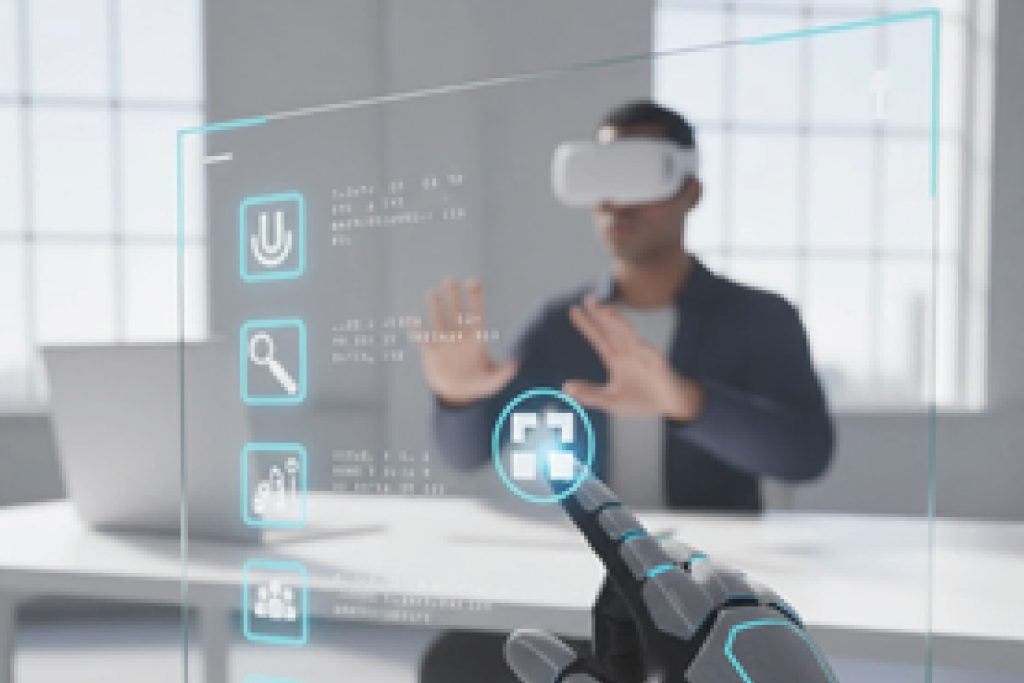
Track 5
Multimedia design, innovation, interaction, and accessibility
Multimedia design as a strategic articulator: Analysis of design in communicative, educational and cultural processes, integrating art, science and technology for social change.
Immersive experiences and new subjectivities: Study of how interfaces, extended realities, and interactive environments shape new forms of cultural consumption.
User-centered accessibility and inclusion: Focus on strategies that guarantee sensory, cognitive and social accessibility for the creation of inclusive digital environments.
Innovation and technological aesthetics: Exploration of contributions in gamification, algorithmic aesthetics and generative artificial intelligence as transformative practices for social problems.
Track chair: Esteban Plaza, Ph.D. (c)
Specific Thematic Lines
- User-centered design and accessibility.
- Experimental production of new media.
- Gamification and educational/social dynamics.
- Development of experiences in immersive environments (AR, VR, RM and XR)
- Art, science and technology for social transformation.
- Visual culture and consumer culture.
- Algorithmic aesthetics, generative narrative, and computational creativity (AI).
- Tangible and intangible accessibility (urbanity and virtuality).
- Human-computer interaction and digital subjectivities.
- Design and heritage.
Guidelines for submitting complete articles
Format and shipping
- Manuscripts must be submitted exclusively in PDF format through the EasyChair platform.
- The document must be submitted without authorship information, in compliance with the double-blind peer review process.
- Articles to be published in Scopus must be written in English.
- Articles to be published as book chapters must be written in Spanish.
- Length: 12 to 15 pages, including references, tables and figures.
- Los trabajos que no cumplan estos requisitos serán rechazados.
Originality and relevance
- The articles must be original and unpublished and aligned with one or more thematic axes of CICIIS 2026.
Format and quality
- Manuscripts must strictly adhere to the official CICIIS 2026 template.
- Figures and tables should be integrated into the text, properly titled and of adequate quality.
Evaluation process
- All articles will be evaluated through double-blind peer review.
- Criteria will be considered for originality, academic quality, clarity, thematic relevance, interdisciplinary contribution, and scientific and social significance.
Academic ethics
- All submissions will be subject to review for plagiarism and self-plagiarism.
- No changes to authorship will be allowed once the article has been accepted.
Registration and presentation
- Each record allows the submission and publication of only one article.
- Publication is conditional upon the effective presentation of the work during the Congress.
- Registrations are personal, non-transferable and non-refundable.