
Why visit
Quito?
Quito is the capital of Ecuador and an Andean city located approximately 2,850 meters above sea level. Its main appeal for tourists lies in the combination of historical heritage, culture, gastronomy, nature, and mountain landscapes—all within a single destination.
Its Historic Center was inscribed by UNESCO on the World Heritage List in 1978. Quito was the first city in the world to receive this designation—along with Kraków—as part of the initial group of sites added to the World Heritage List.
Recognitions and distinctions
UNESCO World Heritage
Since 1978, due to the cultural and historical value of its Historic Center—a hub for social interaction.
Leading City in South America
Quito has received the recognition of South America’s Leading City Destination at the World Travel Awards on eight occasions, according to Quito Turismo.
World Travel Awards
In 2024, Quito Turismo received the World Travel Award for Leading Tourism Board in South America for the first time.
Smart Tourist Destination
In 2024, Quito also obtained certification as an Adhering Smart Tourist Destination 2024–2026 and the distinction as a PIL Destinationoto del modelo DTI.
Condé Nast Traveler
In 2024, Condé Nast Traveler included Quito among its 24 best places to visit in 2024.
Lonely Planet
In 2025, Quito was included by Lonely Planet among the eight best destinations to visit in South America and was highlighted by TripAdvisor in its Traveller’s Choice selection as one of the ten most recommended destinations in the region.
Essential information about
Quito
| Fact | Information |
|---|---|
| Country | Ecuador |
| Capital | Quito |
| Approximate altitude | 2.850 m s. n. m. |
| Language | Spanish |
| Coin | United States Dollar (USD) |
| Location | Ecuadorian Andes, near the equator |
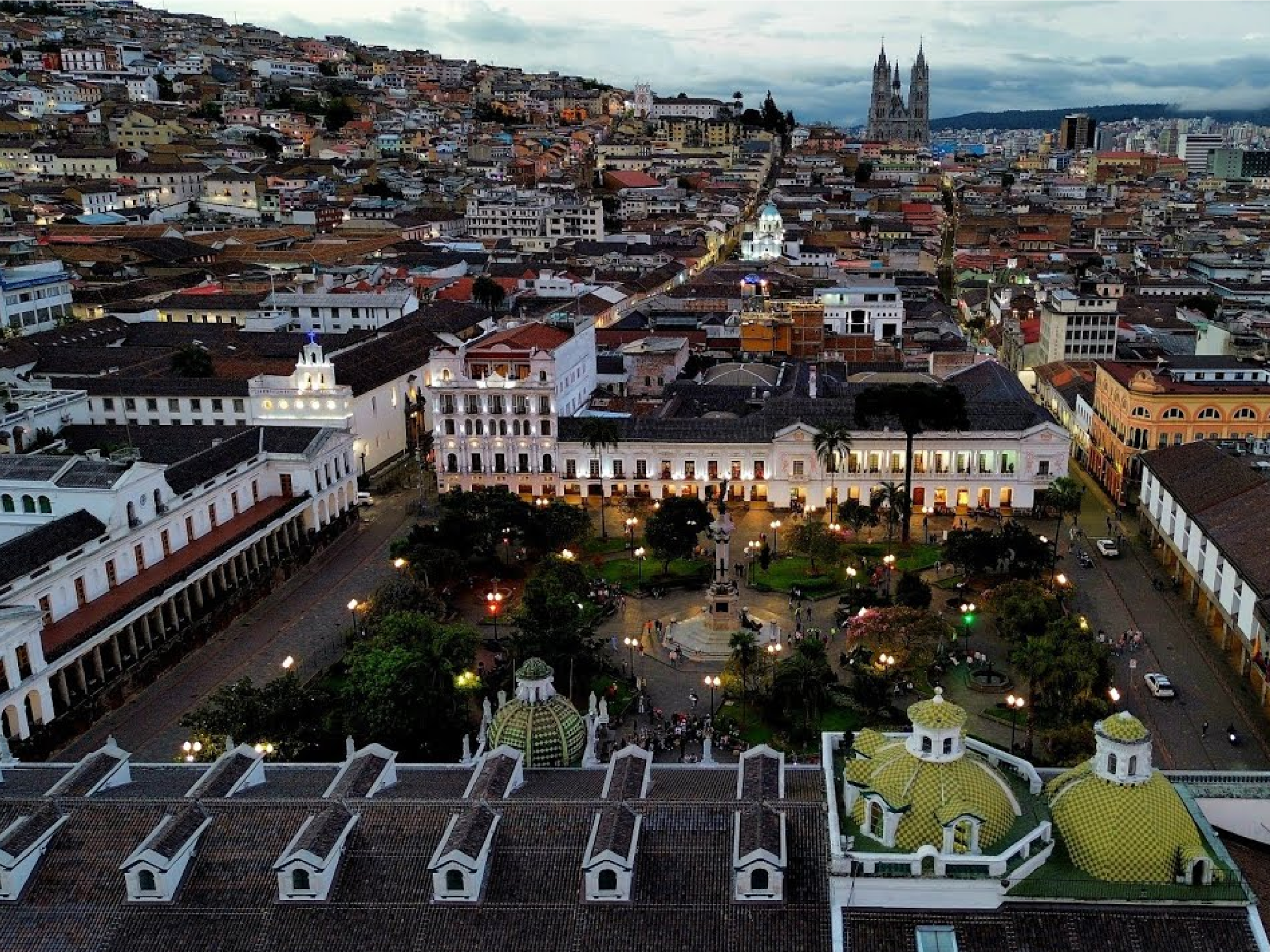
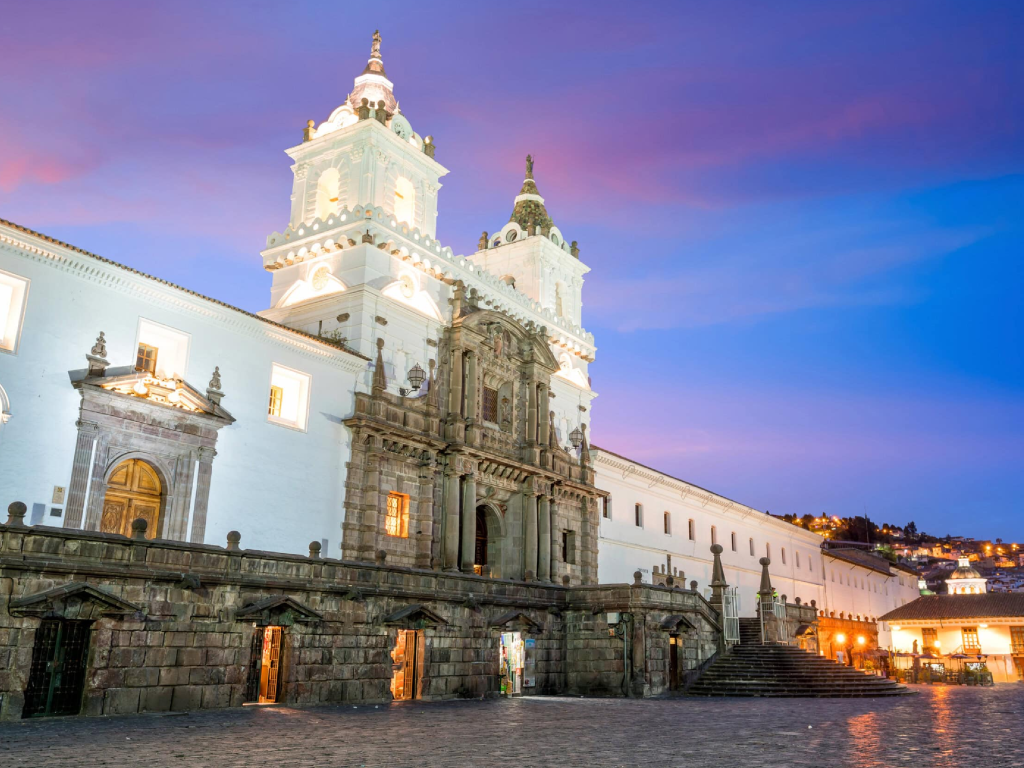
Centro Histórico
UNESCO World Heritage Site. Includes the Plaza Grande, Metropolitan Cathedral, Carondelet Palace, Church of the CSociety of Jesus, San Francisco Square and Convent, and numerous museums and heritage sites.
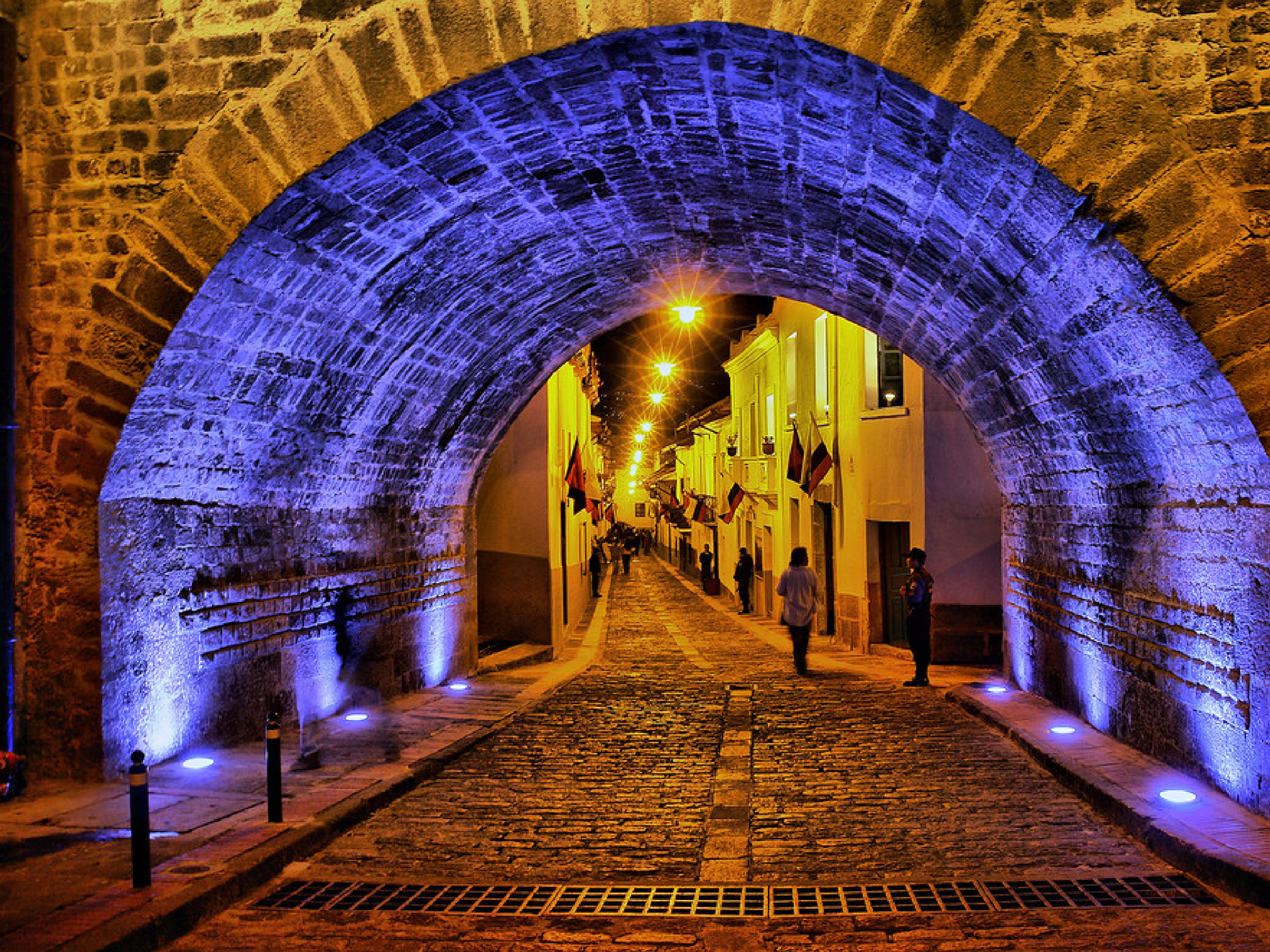
La Ronda
A traditional street in the Historic Center, featuring heritage architecture, gastronomy, handicrafts, and a cultural atmosphere.
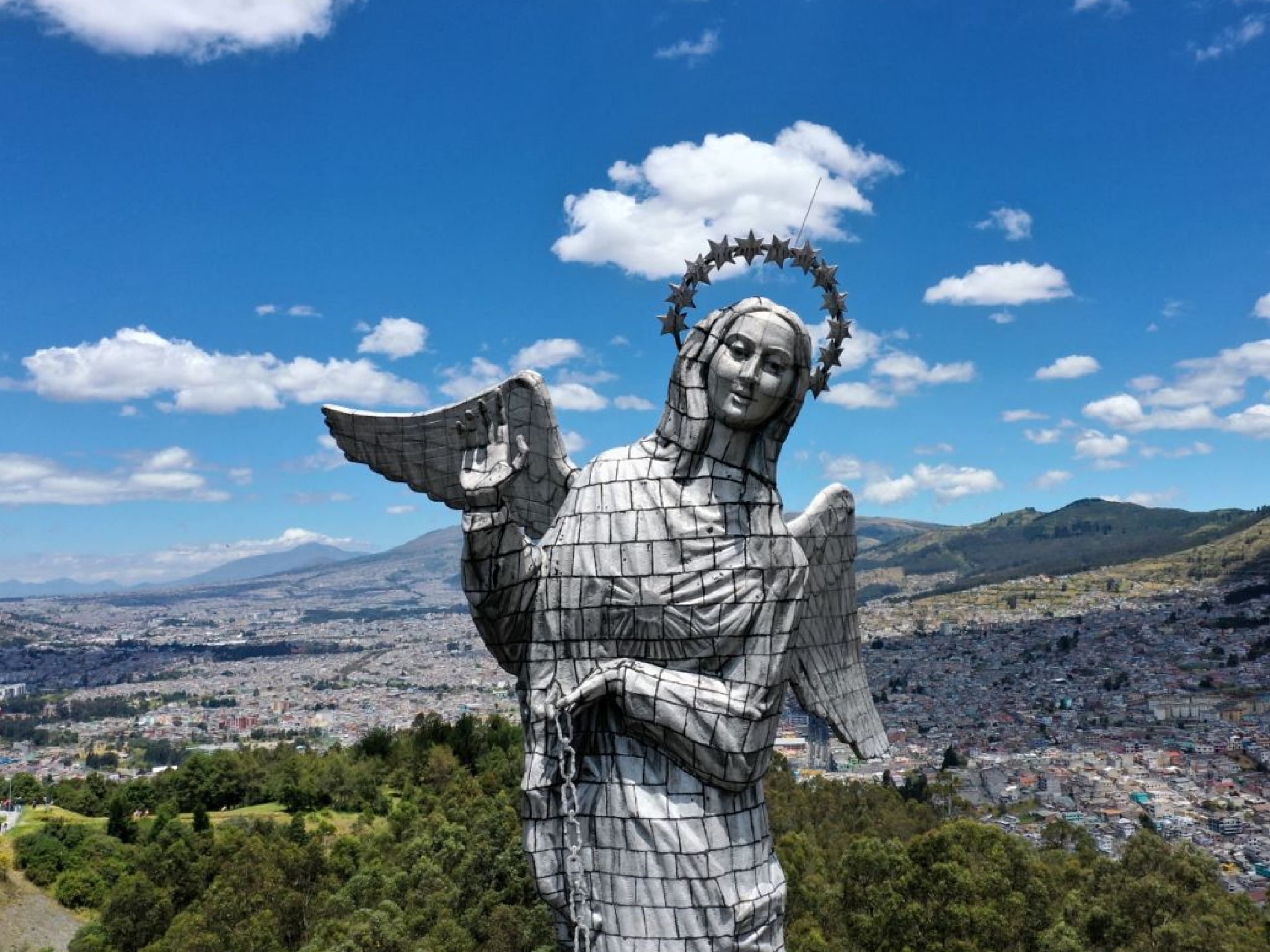
El Panecillo
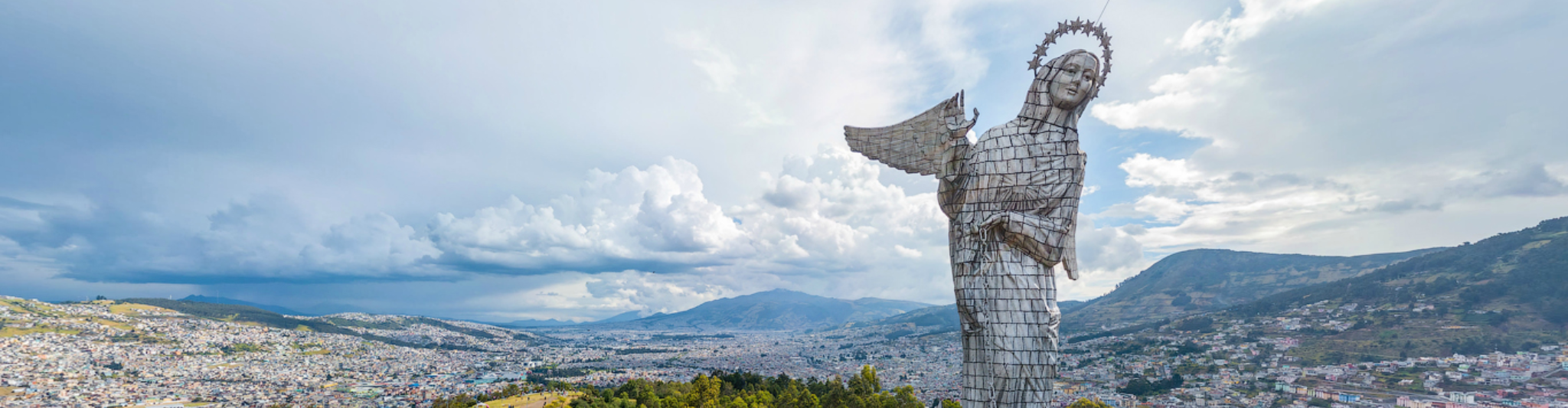
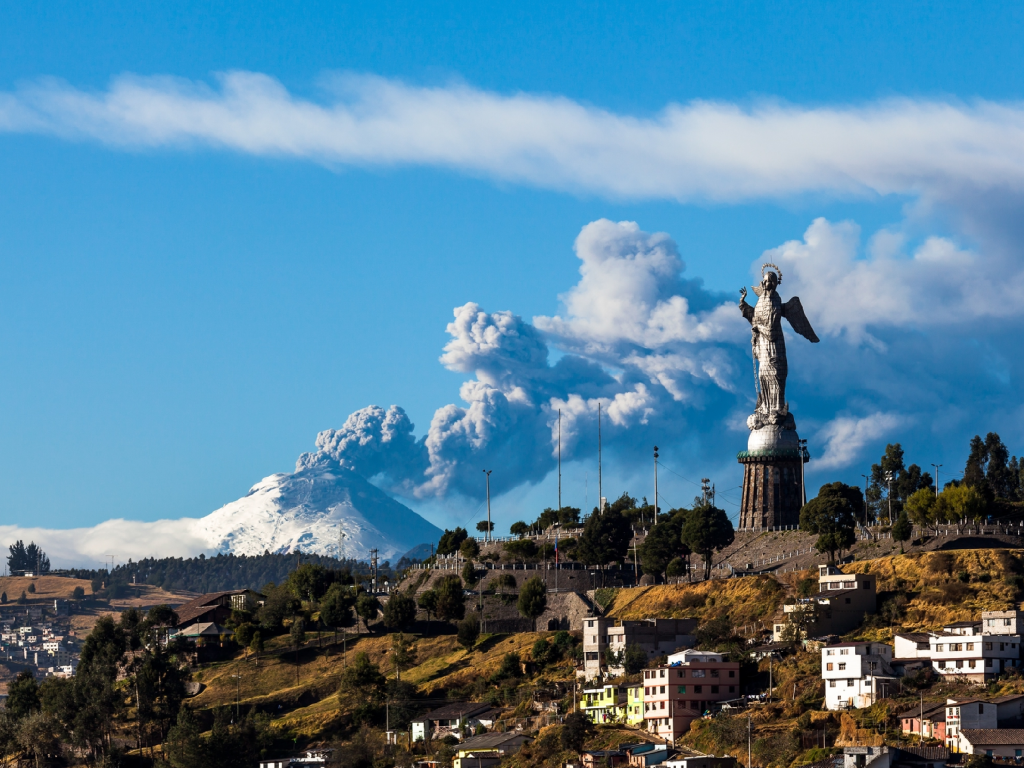
An iconic viewpoint in Quito, crowned by the Virgin of Quito, offering panoramic views of the city.
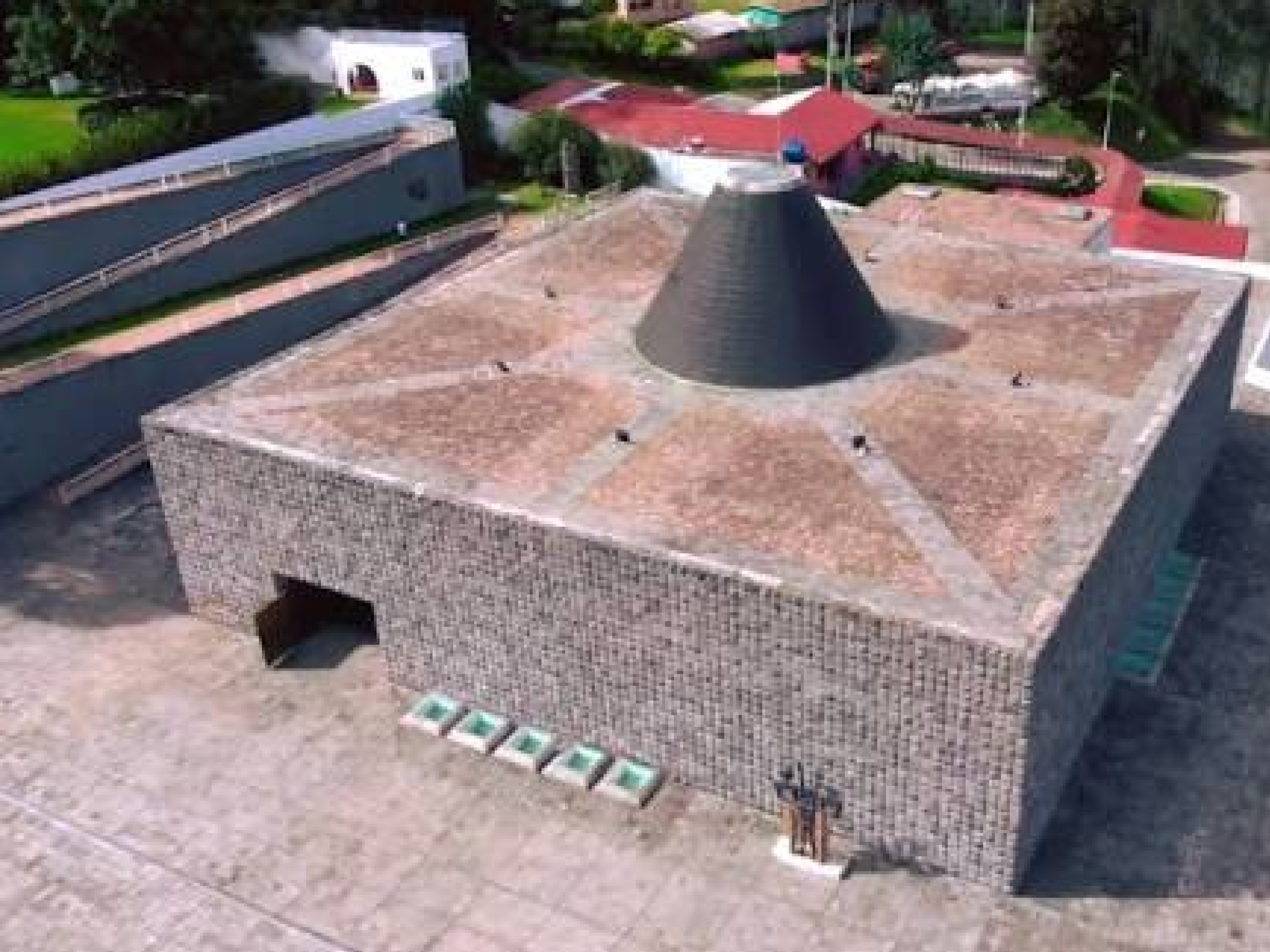
Capilla del Hombre
A space dedicated to the work and thought of the Ecuadorian artist Oswaldo Guayasamín.
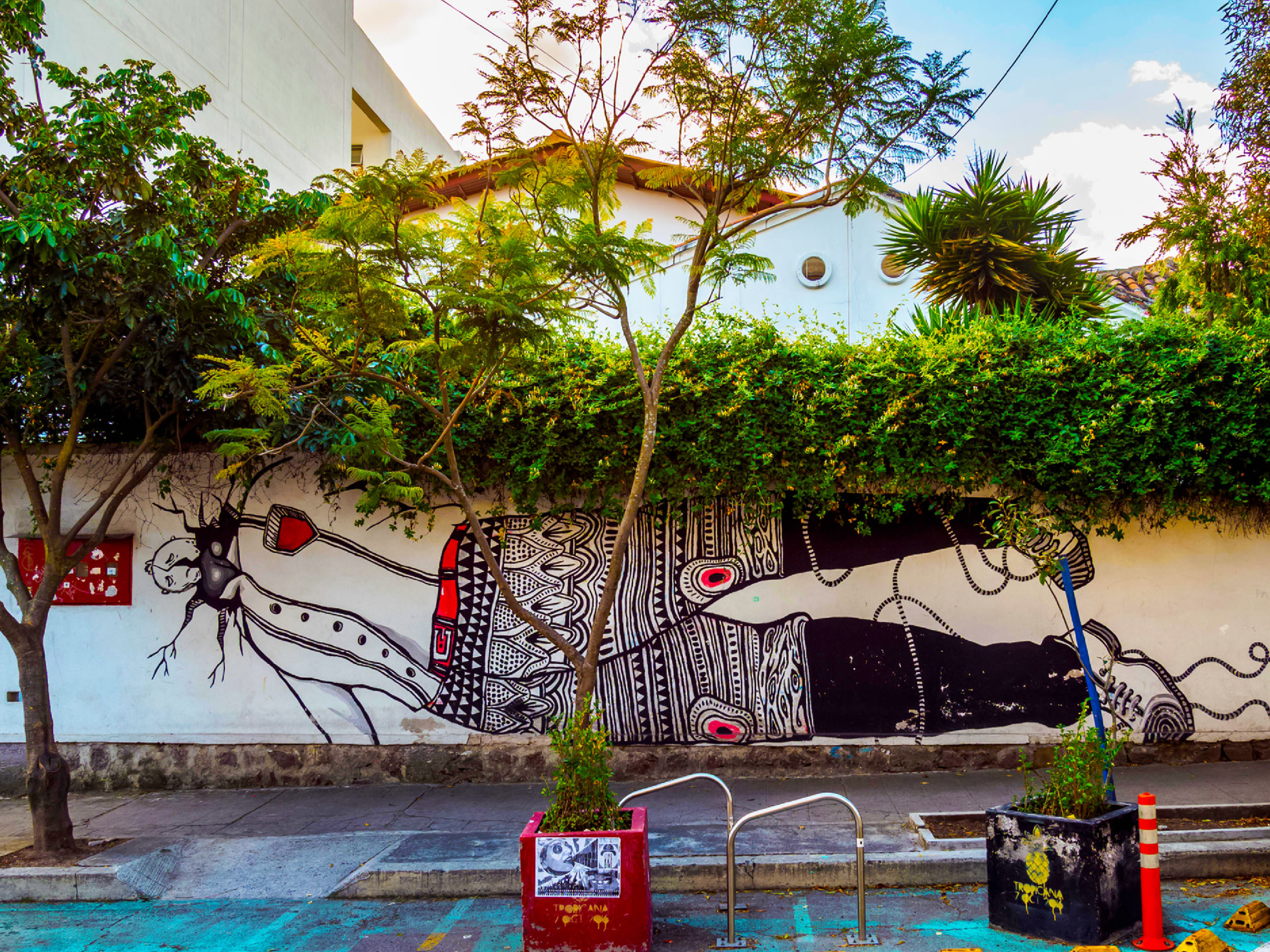
La Floresta
A neighborhood known for its street art, cafés, galleries, and contemporary cultural offerings.
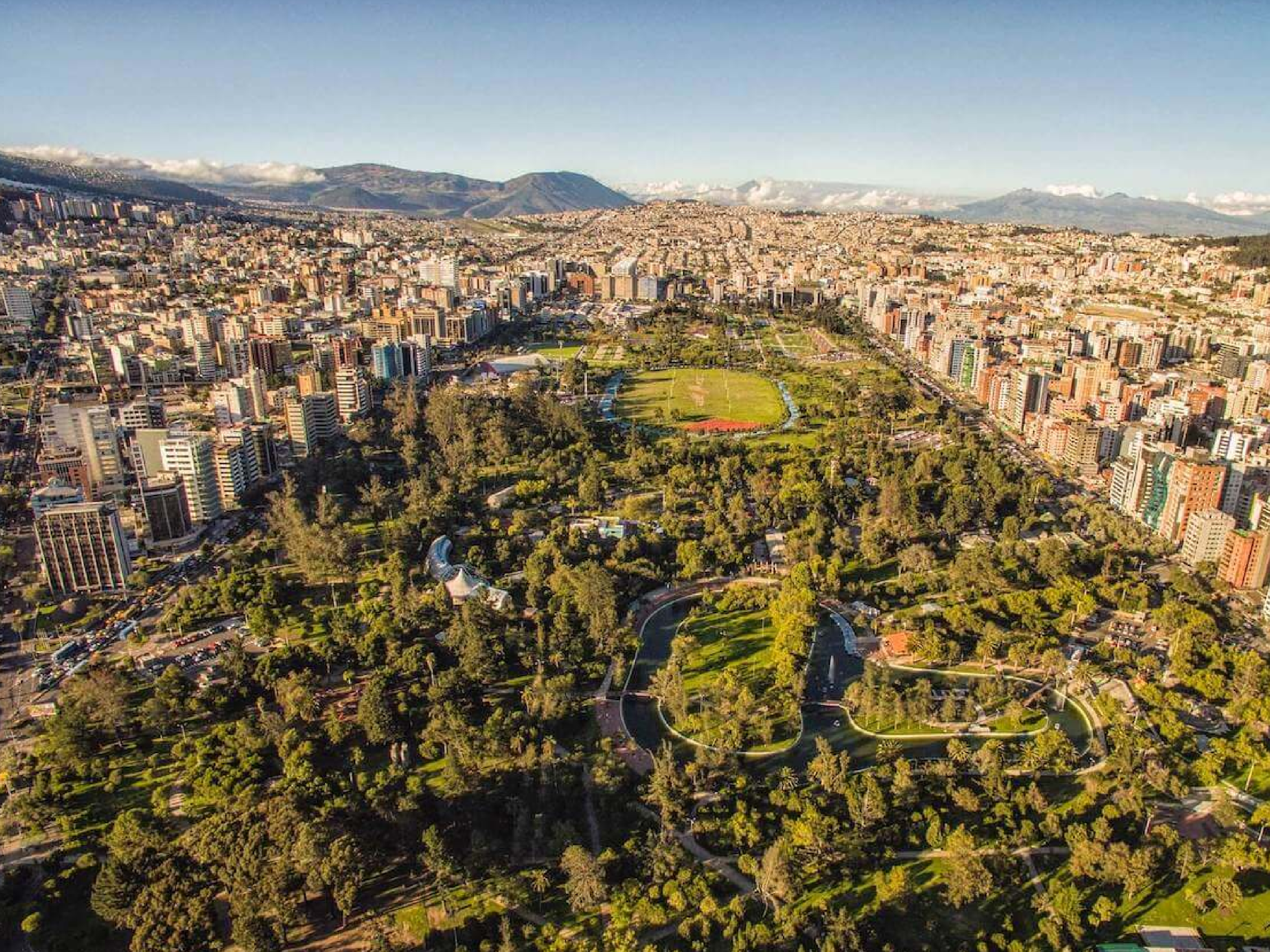
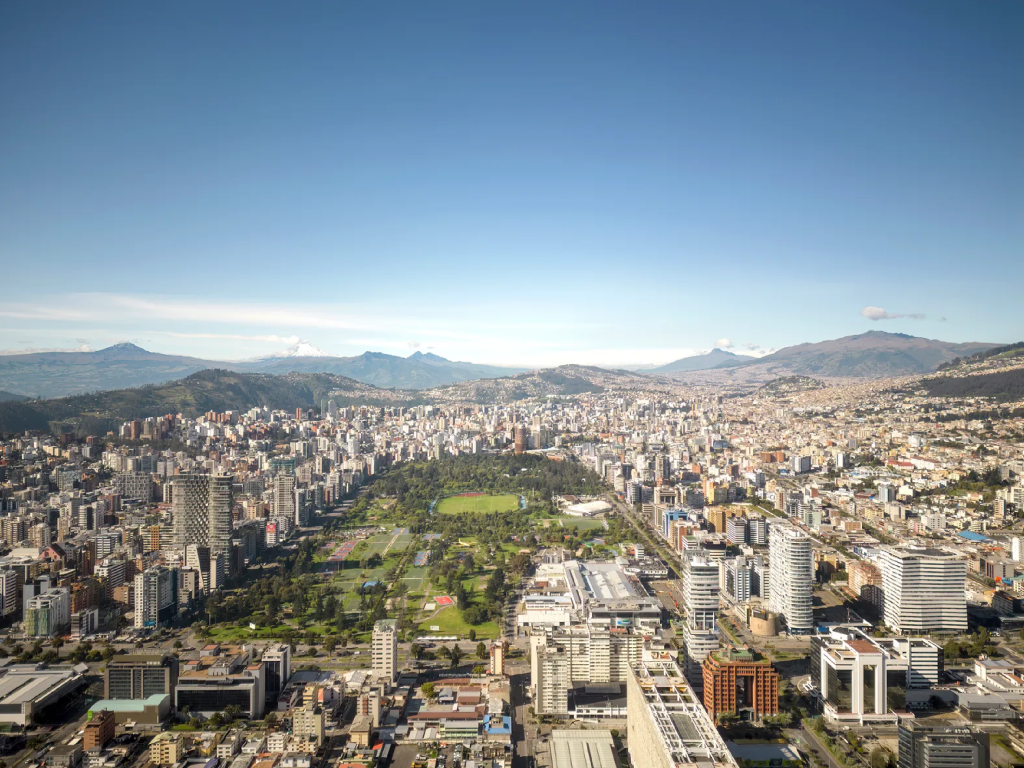
Parque La Carolina
Large urban park in northern Quito, close to hotels, restaurants, and commercial areas.
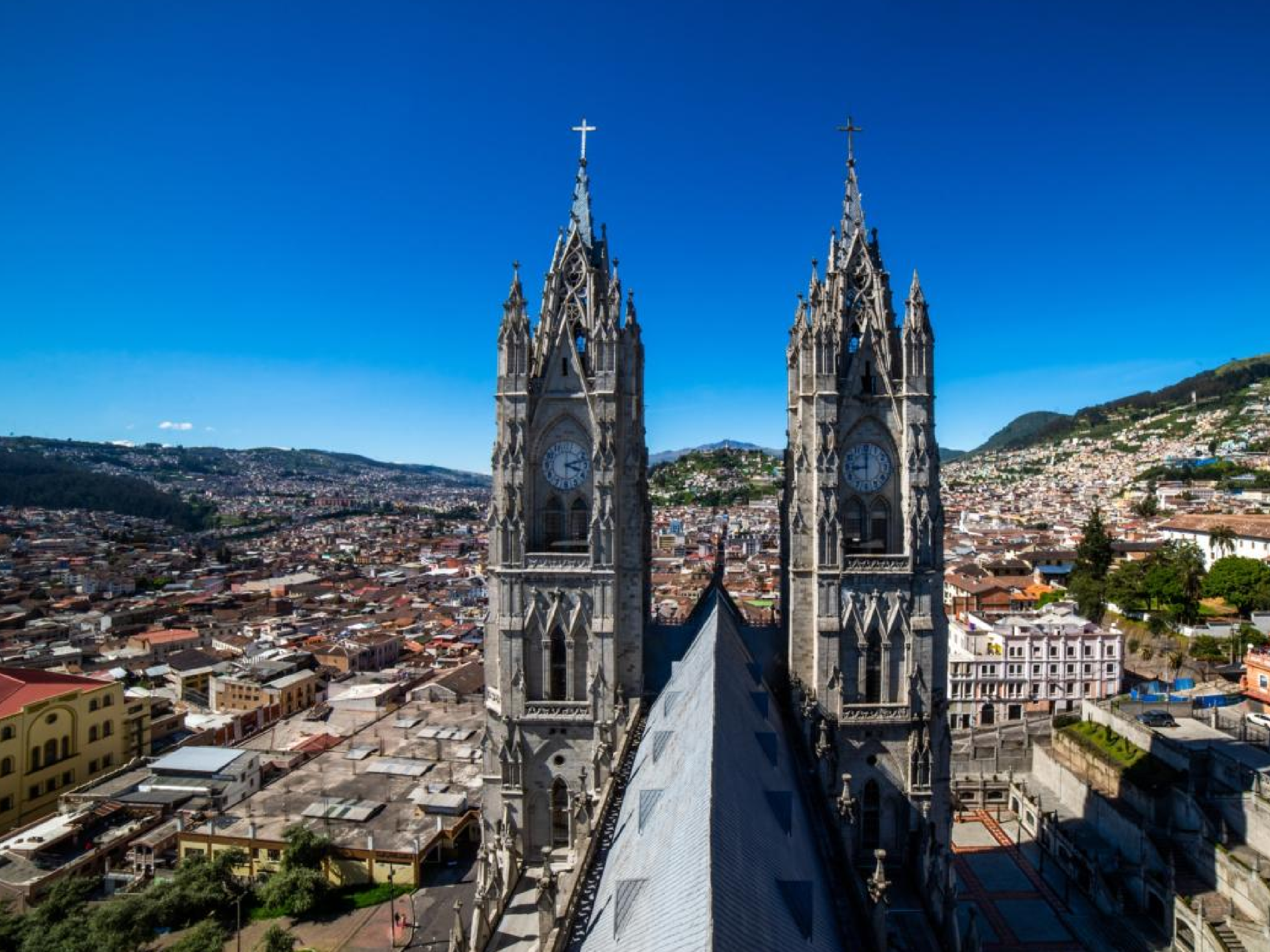
Basílica del Voto Nacional
UNESCO World Heritage Site. Includes the Plaza Grande, Metropolitan Cathedral, Carondelet Palace, Church of the CSociety of Jesus, San Francisco Square and Convent, and numerous museums and heritage sites.
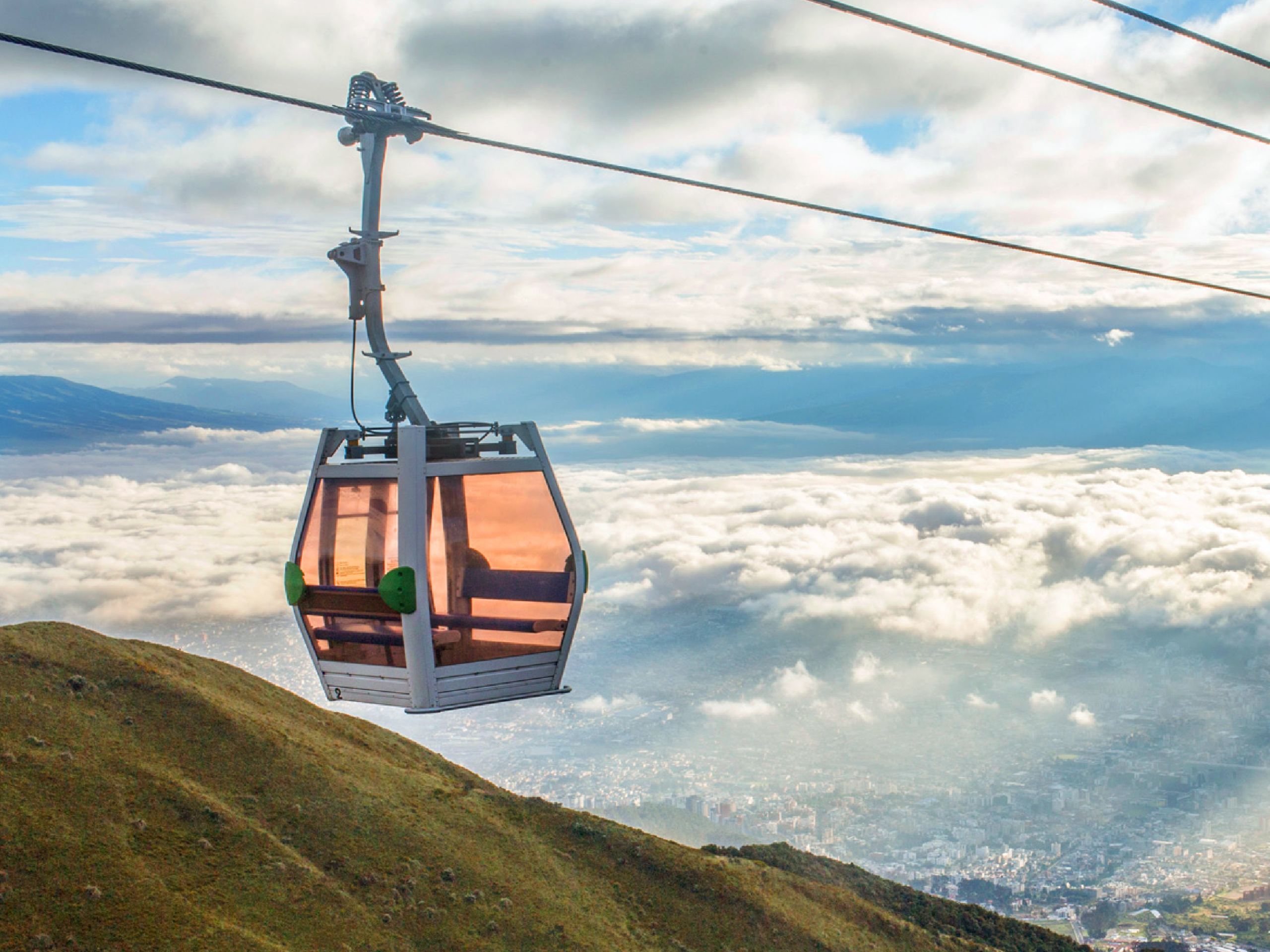
Teleférico de Quito
It allows for an ascent from the city to an altitude of approximately 4,000 meters, providing access to viewpoints and trails on Cruz Loma and Pichincha.
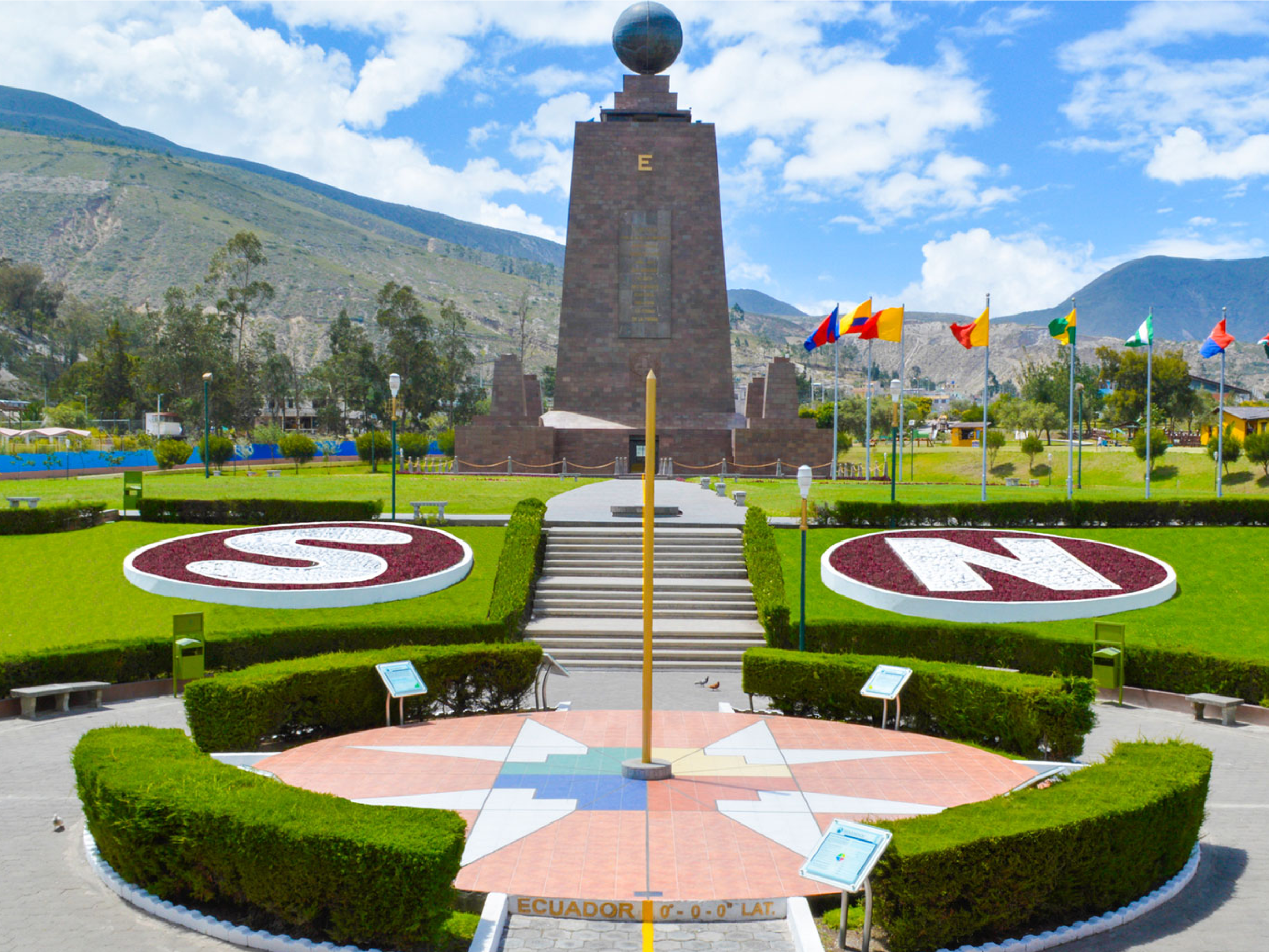
Mitad del Mundo
A tourist complex associated with the equator, located north of Quito. Capilla del Hombre (Chapel of Man): a space dedicated to the work and thought of the Ecuadorian artist Oswaldo Guayasamín.
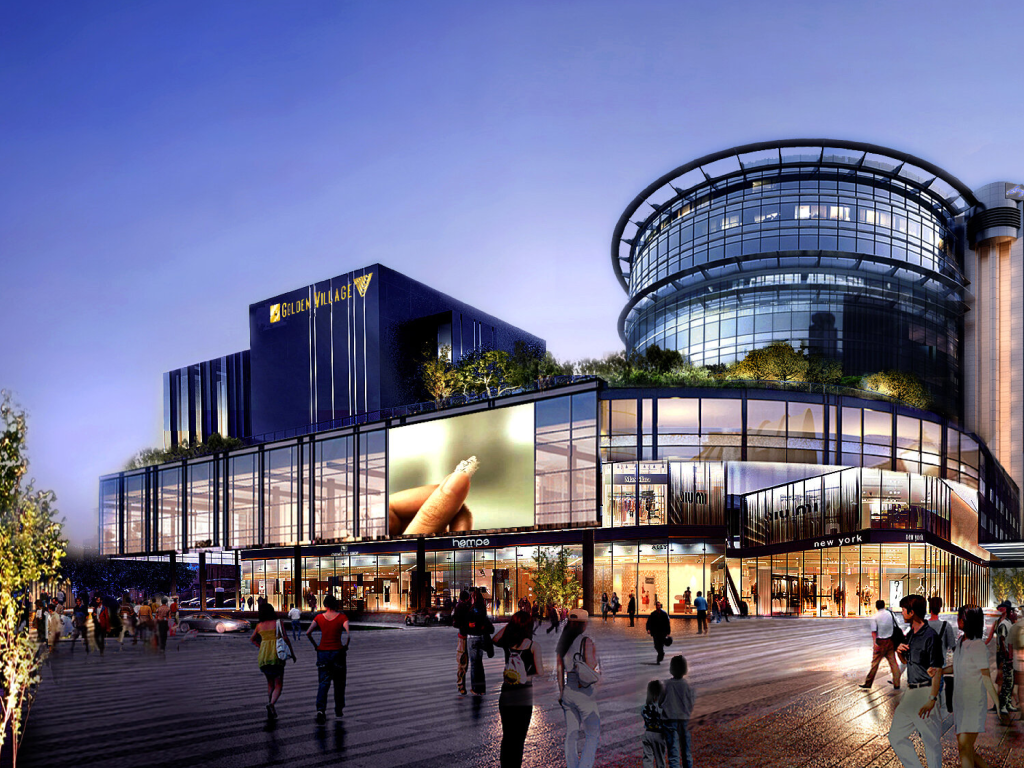
Shopping Centers
Quito offers a wide range of shopping malls distributed throughout various parts of the city. In addition to clothing and technology stores, they typically feature restaurants, cafés, supermarkets, banks, cinemas, and other services.
Oferta de Centros Comerciales
- Quicentro: Ubicado en la Av. Naciones Unidas, entre las avenidas 6 de Diciembre y Shyris. Es una de las principales opciones de compras del centro-norte de Quito y reúne una amplia variedad de tiendas, restaurantes y servicios.
- Centro Comercial Iñaquito (CCI): En la Av. Río Amazonas y Naciones Unidas, en el sector de Iñaquito. Es uno de los centros comerciales tradicionales de Quito y cuenta con tiendas, restaurantes y diferentes servicios.
- Mall El Jardín: Ubicado en la Av. Río Amazonas, en el centro-norte de la ciudad. Es una alternativa conveniente para quienes se hospedan en sectores como La Carolina, La Mariscal o la 12 de Octubre.
- El Bosque Mall: Ubicado en el sector de El Bosque, al noroccidente de Quito. Cuenta con una amplia oferta comercial y gastronómica.
Para los participantes de CIICIS que se hospeden cerca de la Av. 12 de Octubre, La Mariscal o La Carolina, las opciones más prácticas son Quicentro, CCI y Mall El Jardín.
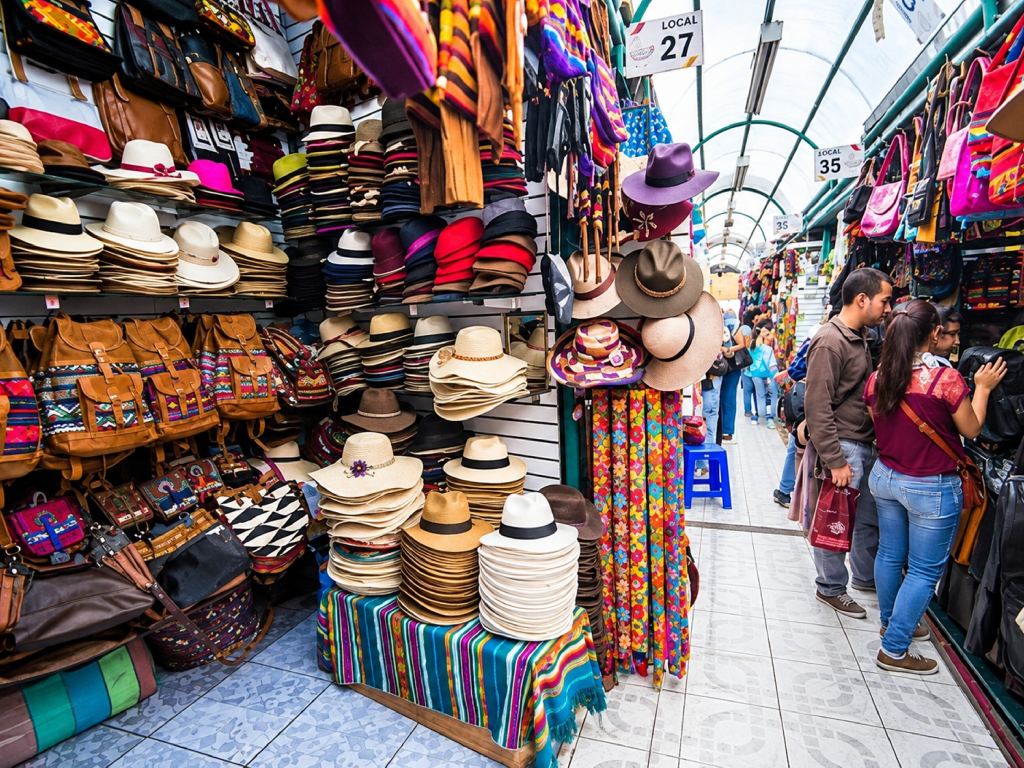
Artisan Markets and Spaces
Markets and artisan spaces are a great way to discover traditional Ecuadorian products and pick up souvenirs from your trip. Quito Turismo highlights these venues as places where handicrafts, traditions, and local products come together.
Oferta de Mercados y Espacios Artesanales
- La Mariscal Artisan Market: Ubicado en Jorge Washington 611, en La Mariscal. Es uno de los principales lugares de Quito para adquirir artesanías ecuatorianas. Cuenta con cerca de 200 locales donde se encuentran tejidos, bordados, joyería, cerámica, bolsos, pinturas y otros productos elaborados por artesanos.
- Mercado Artesanal de Quito: Ubicado en el sector del antiguo aeropuerto, en el pasaje Oe3 Río Amazonas N51-20 y calle N50B. Es otro espacio dedicado a la venta y exposición de artesanías ecuatorianas.
- Mercado de Santa Clara: En el sector de La Mariscal. Además de su oferta gastronómica, Quito Turismo lo incluye dentro de su ruta de mercados por su oferta de artesanías y productos tradicionales.
Tourist destinations near Quito
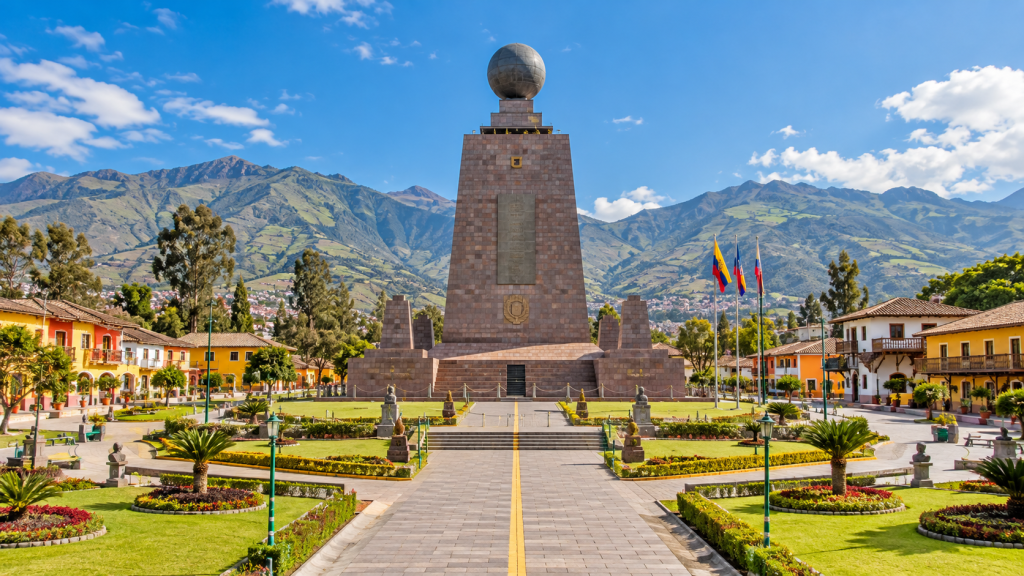
Ciudad Mitad del Mundo
La Ciudad Mitad del Mundo is one of Ecuador’s most iconic tourist attractions. The complex centers around the equatorial line and features a monument, museums, a planetarium, cultural plazas, and various interactive spaces focused on the country’s history, culture, and geography.
Datos Importantes
Distancia: aproximadamente 13,5 km desde Quito, en el sector de San Antonio de Pichincha.
¿Qué visitar?
- Monumento de la Mitad del Mundo.
- Planetario.
- Museo de la Cerveza.
- Museo del Cacao.
- Museo del Tren.
- Plaza Cultural y Plaza Central.
- Espacios de gastronomía y artesanías.
¿Cómo llegar?
Una de las opciones es utilizar los buses de la línea “Mitad del Mundo”, que circulan por la avenida Mariscal Sucre/Occidental. También es posible llegar en taxi, vehículo particular o mediante servicios turísticos. La administración de la Ciudad Mitad del Mundo señala que los buses tienen un costo de referencia de USD 0,40 para adultos.
Ideal para: una excursión de medio día.
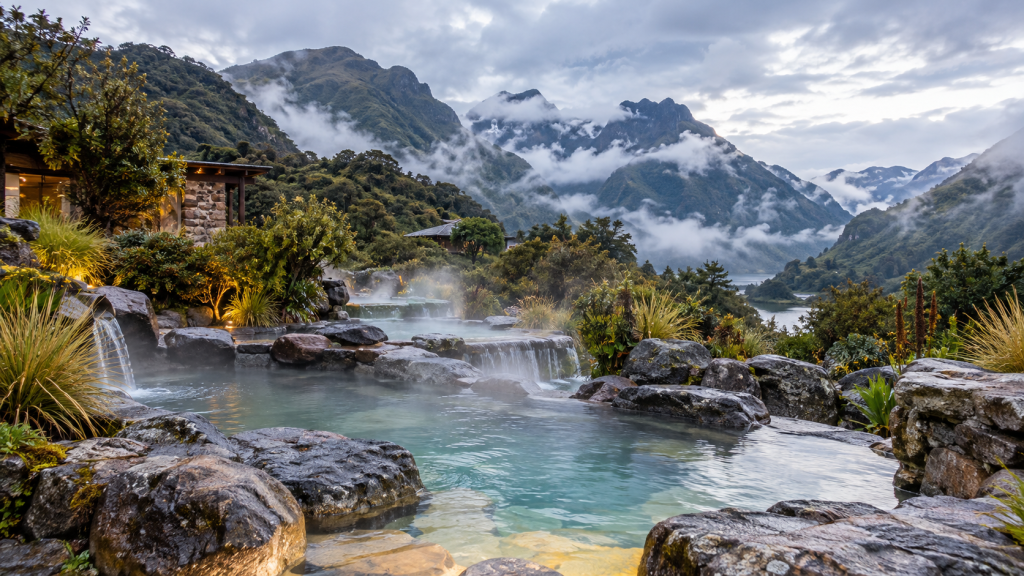
Papallacta
Papallacta is primarily known for its volcanic hot springs, set within a mountain and *páramo* (high-altitude moorland) landscape. It is a great option for those looking to combine relaxation, nature, and Andean scenery. Ecuador Travel also highlights the area’s birdwatching opportunities and natural surroundings.
Datos importantes
Distancia: aproximadamente 60 km desde Quito. El recorrido suele tomar alrededor de dos horas, dependiendo del tráfico y las condiciones de la vía.
¿Qué visitar?
- Complejos de aguas termales.
- Laguna de Papallacta.
- Senderos y paisajes del páramo.
- Sectores vinculados al Parque Nacional Cayambe-Coca.
¿Cómo llegar?
Para transporte público existen frecuencias que salen desde Quito hacia la zona de Papallacta. La Terminal Terrestre de Carcelén es uno de los puntos de referencia para las rutas hacia esta zona; es recomendable confirmar directamente con la cooperativa el lugar exacto de descenso y los horarios antes de viajar.
Ideal para: una excursión de un día.
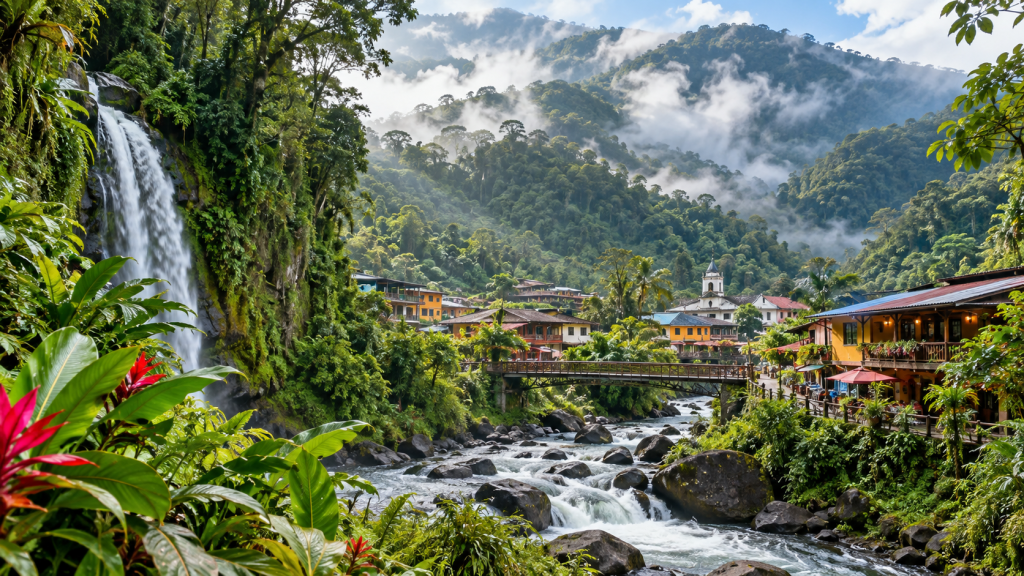
Mindo
Mindo is located in a subtropical valley surrounded by cloud forest and is renowned for its immense biodiversity. It is particularly well-known for birdwatching, as well as for nature and adventure activities. Highlights include the observation of birds, orchids, and butterflies, alongside activities such as rafting and tubing.
Datos importantes
Distancia: aproximadamente 70–80 km al noroccidente de Quito.
Mindo se encuentra en un valle subtropical rodeado por bosque nublado y es reconocido por su enorme biodiversidad. Es especialmente conocido por el aviturismo, además de actividades de naturaleza y aventura. Ecuador Travel destaca la observación de aves, orquídeas y mariposas, así como actividades como rafting, tubing y visitas relacionadas con el cacao y el chocolate.
- ¿Qué visitar y hacer?
- Bosque nublado de Mindo.
- Observación de aves.
- Mariposarios y orquidearios.
- Cascadas y senderos.
- Actividades de aventura.
- Experiencias relacionadas con el cacao y chocolate.
- Sitio arqueológico de Tulipe.
¿Cómo llegar?
Desde Quito se puede utilizar transporte público. El GAD Parroquial de Mindo señala que existen cooperativas que cubren la ruta Quito–Mindo y que también se puede viajar desde la Terminal de Carcelén hacia San Miguel de los Bancos y descender en la “Y de Mindo”, desde donde existen taxis y camionetas hacia el centro poblado.
Ideal para: una excursión de un día o una estadía de una noche.
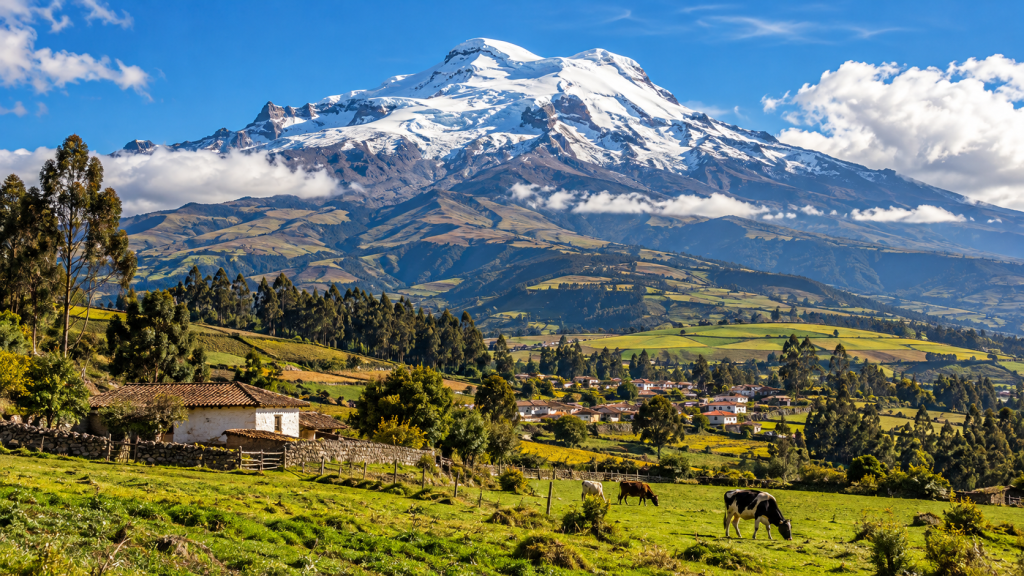
Cayambe
Cayambe is an Andean city located north of Quito, known for its agricultural production, its landscapes, and especially for its traditional bizcochos (biscuits)—typically served with queso de hoja (a type of fresh cheese) and hot chocolate.
Datos Importantes
Distancia: aproximadamente 70 km desde Quito, dependiendo del punto de partida y la ruta.
Cayambe es una ciudad andina ubicada al norte de Quito, reconocida por su producción agrícola, sus paisajes y especialmente por los tradicionales bizcochos de Cayambe, acompañados habitualmente con queso de hoja y chocolate caliente.
También constituye una puerta de entrada a diferentes atractivos naturales de la zona del volcán Cayambe y sus alrededores.
¿Qué visitar?
- Centro de Cayambe.
- Lugares de producción y venta de bizcochos.
- Paisajes y comunidades rurales.
- Sectores vinculados al volcán Cayambe.
- Atractivos naturales de los alrededores.
¿Cómo llegar?
Para llegar en transporte público existen opciones desde Quito. La Terminal de Carcelén y la terminal microrregional de La Ofelia son puntos utilizados para conexiones hacia el norte de Pichincha; la EPMMOP identifica a Cayambe entre los destinos atendidos desde la Ofelia.
Ideal para: una excursión de un día, especialmente si se combina con otros atractivos del norte de Pichincha.
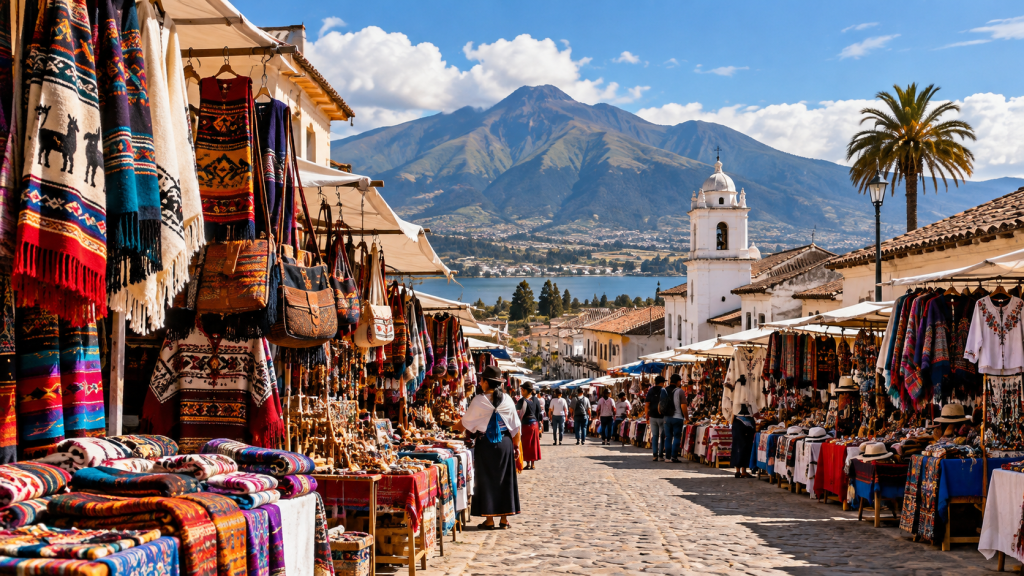
Otavalo
Otavalo is one of Ecuador’s most renowned historical and cultural destinations. The city is known for its indigenous heritage, its textiles and handicrafts, and the Plaza de los Ponchos—one of the city’s primary commercial and cultural hubs.
Datos Importantes
Distancia: aproximadamente 110 km desde Quito.
¿Qué visitar?
- Plaza de los Ponchos y mercado artesanal.
- Lago San Pablo.
- Cascada de Peguche.
- Parque Cóndor.
- Museo Otavalango.
- Comunidades y mercados artesanales de los alrededores.
¿Cómo llegar?
Los buses hacia Otavalo salen principalmente desde la Terminal Terrestre de Carcelén, en el norte de Quito. La EPMMOP identifica a Otavalo entre los destinos atendidos desde esta terminal.
Ideal para: una excursión de un día. Es recomendable salir temprano para aprovechar el recorrido.
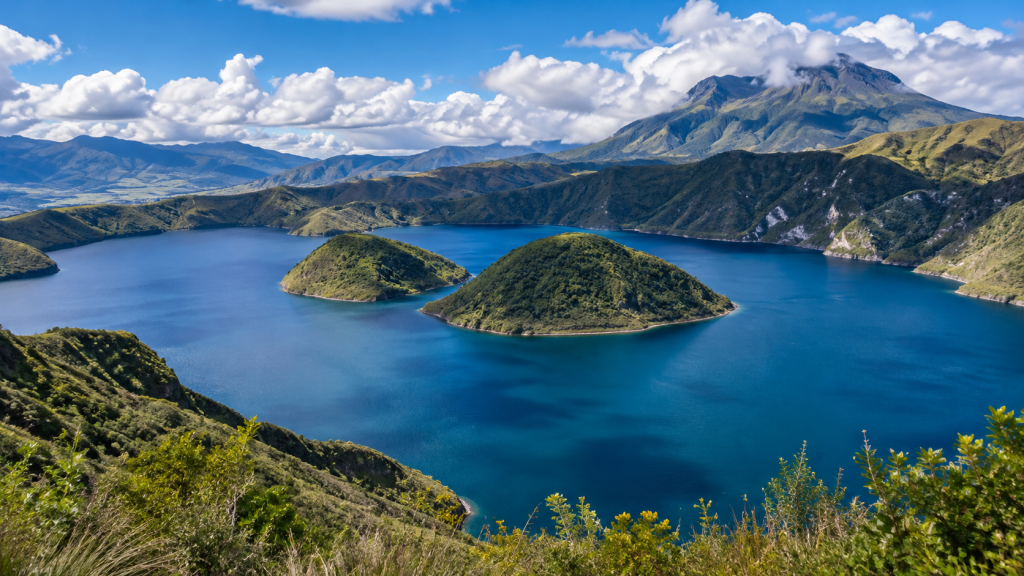
Laguna de Cuicocha
Cuicocha is a volcanic lake located at the foot of the dormant Cotacachi volcano, in the province of Imbabura. It is part of the Cotacachi-Cayapas National Park and is one of the most significant natural attractions in the area.
Datos Importantes
Distancia: aproximadamente 120 km desde Quito.
¿Qué visitar y hacer?
- Laguna de Cuicocha.
- Senderos alrededor de la laguna.
- Paisajes del complejo volcánico Cotacachi–Cuicocha.
- Actividades de senderismo.
- Miradores y fotografía de naturaleza.
El Ministerio del Ambiente señala que el senderismo en la laguna y el cráter de Cuicocha tiene horario de ingreso de 08:00 a 16:30.
¿Cómo llegar?
Una opción es viajar desde Quito hacia Otavalo por la Terminal de Carcelén y posteriormente continuar hacia Cuicocha/Cotacachi mediante transporte local o taxi. También se puede llegar por carretera hasta Cotacachi y continuar aproximadamente 12 km hasta la laguna.
Ideal para: una excursión de un día, especialmente para quienes disfrutan de naturaleza y senderismo.
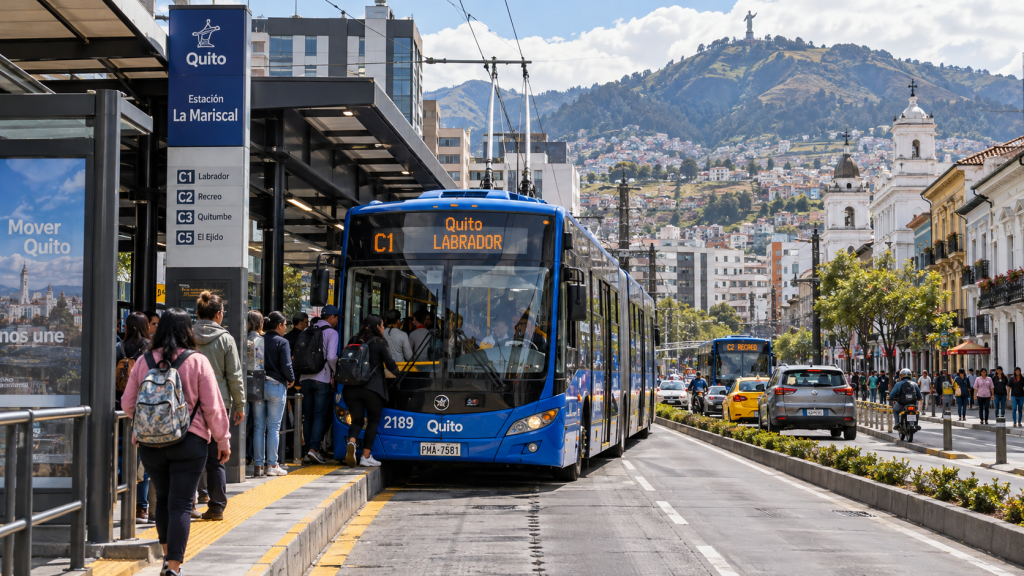
Transport from Quito to various destinations
Carcelén Land Terminal – North
It is the main interprovincial terminal for travel toward the north of Ecuador. From here, there are connections to cities and destinations such as Otavalo, Ibarra, Cayambe, and other locations in the northern Highlands (Sierra). There are also connections to areas within the province of Pichincha.
Dirección: Av. Galo Plaza Lasso, Quito.
Quitumbe Land Terminal – South
It is the main interprovincial terminal in southern Quito, serving as a hub for routes to the central and southern Sierra, the Coast, and the Amazon region. Among the tourist destinations accessible from here is Baños de Agua Santa.
Dirección: Av. Mariscal Sucre, sector Quitumbe.
La Ofelia Terminal
It is a micro-regional terminal located in the north of Quito. It is particularly useful for traveling to areas in the northwestern part of Pichincha, including Mindo and other destinations in that region.
Dirección: Av. Diego Vásquez de Cepeda y calle 11, norte de Quito.
Relevant Information
What should you do if you only have one or two days?
If your time is limited, a practical approach is to spend one morning exploring the Historic Center—including its main churches, squares, and museums—and set aside another part of the day for a viewpoint or a cultural activity. If you have a second day, you could choose between the cable car (Teleférico), Mitad del Mundo, La Carolina Park, the Capilla del Hombre, or one of the nearby natural areas.
To make the best use of your time, it is advisable to organize your visits by area and avoid crossing the city multiple times in a single day.
Quito in November: weather during CIICIS 2026
November falls within Quito’s wettest period, which lasts roughly from October to May. This does not mean that it rains all day long; it is common to have sunny or dry mornings, followed by cloudiness or rain.
- Typical daytime reference temperature: approximately 17–19 °C.
- Typical nighttime reference temperature: approximately 8–10 °C.
- Rain, cloud cover, and rapid changes in conditions may occur.
- The morning is usually a good time for outdoor activities.
- The climate can vary depending on the area: the valleys, the Historic Center, the cable car (Teleférico), the Middle of the World (Mitad del Mundo), and the Andean Chocó may all have different conditions.
What clothes should I pack for November?
- Layered clothing to adapt to temperature changes.
- Waterproof or windproof jacket.
- Comfortable shoes with good grip for walking.
- Sunscreen and sunglasses.
- Hat or cap.
- Compact umbrella as a backup.
- Protection for phones, cameras, and other electronic devices.
Height: an important aspect for visitors
Quito is located approximately 2,850 meters above sea level. People arriving from low-altitude areas may experience fatigue, headaches, or shortness of breath during the first few hours. It is recommended to start with low-exertion activities, stay hydrated, and avoid intense physical effort immediately upon arrival.
The cable car and other mountain attractions are located at a higher altitude than the urban area, so the cold, wind, and physical exertion may be felt more intensely.
How to get around Quito
- Quito Metro: useful for traveling along the north-south axis. The standard fare, as indicated by Visit Quito, is USD 0.45.
- Trolleybus and Ecovía: main corridors that complement the Metro. La tarifa integral indicada por Visit Quito es USD 0,35.
- Taxi: convenient for door-to-door trips, especially when carrying luggage or traveling at night.
- Mobility apps: they can be a practical alternative for direct travel.
- Urban bus: an affordable option for areas that lack a direct connection to the Metro or major transit corridors.
Tourist information points
Quito cuenta con puntos oficiales de información turística gestionados por Quito Turismo y aliados municipales. Hay puntos en el Aeropuerto Internacional Mariscal Sucre, La Mariscal, el Centro Histórico y la Terminal Terrestre de Quitumbe. Allí los visitantes pueden recibir orientación, mapas y recomendaciones sobre transporte y actividades.
Gastronomía que vale la pena probar
- Locro de papa.
- Fritada.
- Hornado.
- Yahuarlocro.
- Empanadas de viento.
- Pristiños.
- Colaciones quiteñas.
- Canelazo.
- Colada morada y guaguas de pan, especialmente durante la temporada de noviembre.
Centros de Atención Médica
Para los participantes de CIICIS 2026 que se hospeden en sectores como 12 de Octubre, La Mariscal, La Floresta, Centro Histórico o centro-norte de Quito, existen varias alternativas de atención médica:
- Hospital Vozandes Quito: Veracruz, Av. Juan José de Villalengua Oe2-37. Hospital privado.
- Hospital Metropolitano: Av. Mariana de Jesús s/n y Nicolás Arteta. Es un hospital privado con múltiples especialidades y servicio de Emergencia las 24 horas, los 365 días del año.
- Hospital Capital: Ubicado en el sector de la Av. 6 de Diciembre.
- Hospital de Especialidades Eugenio Espejo: Av. Gran Colombia, una de las principales instituciones hospitalarias de referencia de Quito, hospital público.
- Hospital Militar: sector Av. Gran Colombia y Queseras del Medio. Hospital privado.
- Centro de Salud La Vicentina: Establecimiento del Ministerio de Salud Pública. Ubicado en la calle Pablo Guevara, entre Toribio Hidalgo y Luis Godín (Barrio La Vicentina).
- Dispensario Parroquial María Auxiliadora: Ubicado en la Avenida 12 de Octubre N23-78 y Veintimilla.
- Veris 12 de Octubre: Ubicado directamente en la Av. 12 de Octubre; puede ser una alternativa práctica para consultas y atención ambulatoria.
En caso de una emergencia médica, se recomienda llamar al 911, número nacional de emergencias de Ecuador.
Recomendación final para participantes del CIICIS 2026
For the past 20 years, Salesian universities have been emerging rapidly across different continents, each with its own distinct characteristics. It was then that Don Bosco's eighth successor, Don Juan Edmundo Vecchi Monti (1995-2002), emphasized the need for the General Directorate of the Salesian Congregation to accompany and guide these newly developing university institutions. Following this development and after several meetings worldwide, on January 7, 2003, the Rector Major of the Salesians, Don Pascual Chávez Villanueva, and his Council, in plenary session, unanimously approved the documents "Identity of Salesian Institutions of Higher Education" and "Policies for the Salesian Presence in Higher Education." These documents now serve as the Congregation's roadmap for these institutions and are integral to the projects of the Salesian Provinces in the various countries where the Salesians are present. Thus, looking to the future, the IUS find in these two documents instruments of direction and governance regarding the definition of the Salesian character of these works, the description of the fundamental lines, the identification of the new goals and objectives that must be achieved; in such a way that the Salesian Congregation will certainly build firmly within the university sphere an educational tradition that has already begun.
Official and useful links
Visit Quito – sitio oficial de turismo
Quito Turismo – Empresa Pública Metropolitana de Gestión de Destino Turístico
Guía oficial de movilidad en Quito
NOTA: La información es referencial y tiene fines únicamente orientativos. Los participantes podrán acudir libremente al establecimiento de salud que consideren más conveniente.